FIFA’s final international window before the World Cup has rolled around, and the first wave of friendlies have provided clear storylines. So far, the UEFA teams look the most plausible contenders, while several South American, African and host teams have more questions than answers ahead of three crucial group stage matches.
France Remains a Talent Factory
France closed the March window with two high-profile wins, extending their unbeaten run to nine games. Against Brazil in Foxborough, Kylian Mbappé lobbed Ederson to score the opener and Hugo Ekitike added the second from Michael Olise’s cut-back; even after Dayot Upamecano’s red card in the second half, France managed to win 2-1 by defending deep and surviving Brazil’s late pressure. Brazil’s back line appeared weak in this match.
Three days later, a heavily rotated XI beat Colombia 3–1, with Désiré Doué scoring twice and Marcus Thuram scoring the other. The score flattered France somewhat in a match where Colombia still created chances, but what was more important was how smoothly the French “B-side” functioned: Doué looked poised to get some serious minutes in the tournament, and his overall structure was hardly inferior to that of the international teams ranked in the top 20.
Other UEFA Featured So Far
Croatia, the Netherlands, Austria and Germany all provide significant markers.
Croatia beat Colombia 2-1 in Orlando, turning an early 0-1 deficit into an efficient and mature win. Jhon Arias’ second-minute opener was immediately canceled out by a deflected long-range shot from Luka Vušković, and Igor Matanović headed home from a corner just before the break; From there, Croatia controlled the scoreline and showed the dark horse profile everyone expected while showing there is still a gap between UEFA and CONMEBOL.
Austria crushed Ghana 5-1 in Vienna, a result that exposed the fragility of the Black Stars as well as Ralf Rangnick’s side. Marcel Sabitzer led the game with a goal and as many assists, Michael Gregoritsch and Stefan Posch opened the scoring early in the second half, and late strikes from Chukwuemeka and Seiwald turned it into Ghana’s heaviest defeat in nearly two decades.
The Netherlands beat Norway 2-1 in Amsterdam, coming from behind after Andreas Schjelderup’s opener. Virgil van Dijk’s header from Teun Koopmeiners’ corner and Tijjani Reijnders’ well-timed strike completed the turnaround, underlining how central Reijnders is now as a two-way midfielder in Koeman’s system.
Germany produced their wildest scoreline in this window with a 4–3 away win over Switzerland, in which Florian Wirtz had a hand in all four goals. He assisted Jonathan Tah’s header, teed up Serge Gnabry, then scored twice – including the winner in the top corner in the 85th minute – but the German back line was repeatedly exposed by crosses and transitions that left Julian Nagelsmann worried.
Spain, on the other hand, produced an easy 3-0 win over Serbia. Mikel Oyarzabal’s double and a debut goal for Víctor Muñoz capped a game in which Spain had around 70 percent of the ball and never let Serbia breathe, the talent gap was clear to see.
England and Scotland Disappointed
Scotland’s 1-0 home defeat to Japan was a reminder of how good their margins are. Steve Clarke’s side hit the post through Scott McTominay, but faded under Japanese pressure and fresh legs; Junya Ito’s winning goal in the 83rd minute was created after being dominated by Japan for a long time.
England’s 1-1 draw with Uruguay at Wembley felt like a missed opportunity. Ben White marked his return with a late kick from a set-piece routine, only to concede a penalty in stoppage time which was converted by Federico Valverde; in between, a rotated England side struggled to create clear chances from open play, while Uruguay will appreciate their improved performance.
CAF Countries Make Statements of Intent
Across CAF, the period has been more encouraging.
Nigeria, who will not be appearing at the World Cup, beat qualifier Iran 2-1 in Antalya, with early goals from Moses Simon and Akor Adams holding out despite a reply from Mehdi Taremi. South Africa drew 1-1 with Panama in Durban, a solid but unspectacular game.
Algeria beat Guatemala 7-0 in Genoa, with Amine Gouiri, Riyad Mahrez, Houssem Aouar and others all on the scoresheet in a match that was effectively an hour’s practice. Tunisia beat Haiti 1–0 thanks to Mouhamed Tounekti’s goal and then set the game against ten men after Haiti received a red card.
Senegal looked in control in a 2-0 win over Peru in Paris, with Nicolas Jackson and Ismaïla Sarr on target. Ivory Coast produced one of the standout results of this window, a 4-0 away win over South Korea in which Evann Guessand, Simon Adingra, Martial Godo and Wilfried Singo all scored and the xG gap underlined that dominance.
Morocco’s 1-1 draw with Ecuador in Madrid falls into the “useful test” category. They came from behind through Neil El Aynoui’s header from a corner, and while Ecuador’s back line defended strongly, they again offered relatively limited attacking variety outside of transitions and wide serving.
For Team America, Best Mixed Window
For CONMEBOL and most of CONCACAF, this window is uncomfortable.
Colombia’s defeats to Croatia and France exposed the general problems under Néstor Lorenzo: an aging core, a reliance on James Rodríguez who no longer produces consistent results, and weak goalkeeping and set-piece defense. Calls from fans to integrate more in-form options like Real Betis’ Nelson Deossa feel justified when you see the current team running out of ideas late in the game.
Argentina’s 2-1 win over Mauritania at La Bombonera underlined the “calibration problem” in their high-stakes World Cup preparations. Enzo Fernández and Nico Paz put them 2-0 up before the break, but the second half produced no shots on target, a drop in intensity was apparent even after Lionel Messi came on, and a soft set-piece was awarded to Jordan Lefort in stoppage time. Argentina controlled the game, but the pressure was never the answer to retaining the title.
Paraguay were quietly pleased with their 1-0 away win over Greece, which was decided by a Diego Gómez goal in a tight game in which they soaked up the pressure and capitalized on their chances. Jordan, on the other hand, will see the 2-2 draw with Costa Rica as a missed opportunity: they took a 2-0 lead in Antalya through Baha’ Faisal and Ibrahim Sabra, only conceding twice in the last 10 minutes from Josimar Alcócer and Warren Madrigal. Costa Rica is still shocked that it missed the 2026 World Cup.
Host Country Lacks Joy Ahead of World Cup
For the three hosts, this window is more of a warning than a celebration.
Canada’s 2-2 draw with Iceland in Toronto was a messy comeback rather than a positive step forward. Defensive errors gave Orri Óskarsson two goals in the space of 25 minutes, and while two Jonathan David penalties in the second half salvaged a draw, another late red card for Tajon Buchanan and overall volatility will concern Jesse Marsch.
Mexico’s 0-0 with Portugal at the reopened Azteca was overshadowed by tragedy after a drunken fan fell from the top floor and died before the match started, a detail that understandably colored the coverage. On the pitch, Mexico pressed well gradually and arguably had the better chances – including a missed close-range header from Ricardo “Hormiga” González – but still lacked an attacking edge; Portugal, spinning and far from full speed, also did not show elite sharpness.
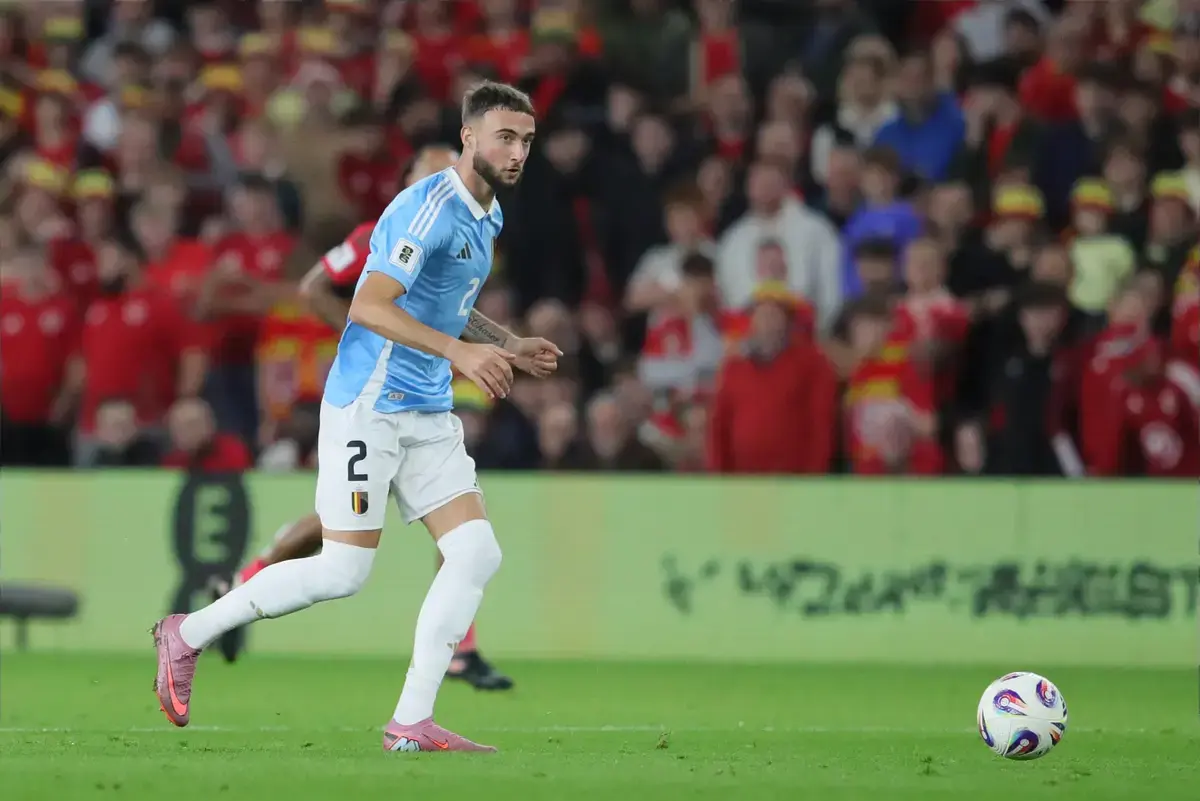
The USMNT’s 5-2 loss to Belgium in Atlanta was the harshest reality ever. Weston McKennie’s first-half header gave the US a 1-0 lead before Zeno Debast equalized before the break, and then Belgium ran riot after the break: Amadou Onana, Charles De Ketelaere (penalty) and a Dodi Lukebakio brace opened the game before Patrick Agyemang’s consolation goal. Mauricio Pochettino and some US media described it as a World Cup “reality check” – the attack and depth looked fine, but the collective defensive structure and transitions were far from what a serious contender would need, while Belgium remained a team that was regularly tested on European nights and could still win a lot of games.
Main Photo Credit: Smartframe Images
PakarPBN
A Private Blog Network (PBN) is a collection of websites that are controlled by a single individual or organization and used primarily to build backlinks to a “money site” in order to influence its ranking in search engines such as Google. The core idea behind a PBN is based on the importance of backlinks in Google’s ranking algorithm. Since Google views backlinks as signals of authority and trust, some website owners attempt to artificially create these signals through a controlled network of sites.
In a typical PBN setup, the owner acquires expired or aged domains that already have existing authority, backlinks, and history. These domains are rebuilt with new content and hosted separately, often using different IP addresses, hosting providers, themes, and ownership details to make them appear unrelated. Within the content published on these sites, links are strategically placed that point to the main website the owner wants to rank higher. By doing this, the owner attempts to pass link equity (also known as “link juice”) from the PBN sites to the target website.
The purpose of a PBN is to give the impression that the target website is naturally earning links from multiple independent sources. If done effectively, this can temporarily improve keyword rankings, increase organic visibility, and drive more traffic from search results.